
Superheroes.
They are around us and in us.
Matters of conscience, no matter how much we want them to be simple and straightforward, are complicated. Other desires and compulsions often override the desire to do the right thing. It can be difficult to balance what we think is self-interest with a greater good, whatever the enterprise. Yet stripping everything away to focus on central truths is liberating, especially when we lock arms to honor the truths and deliver the goods.
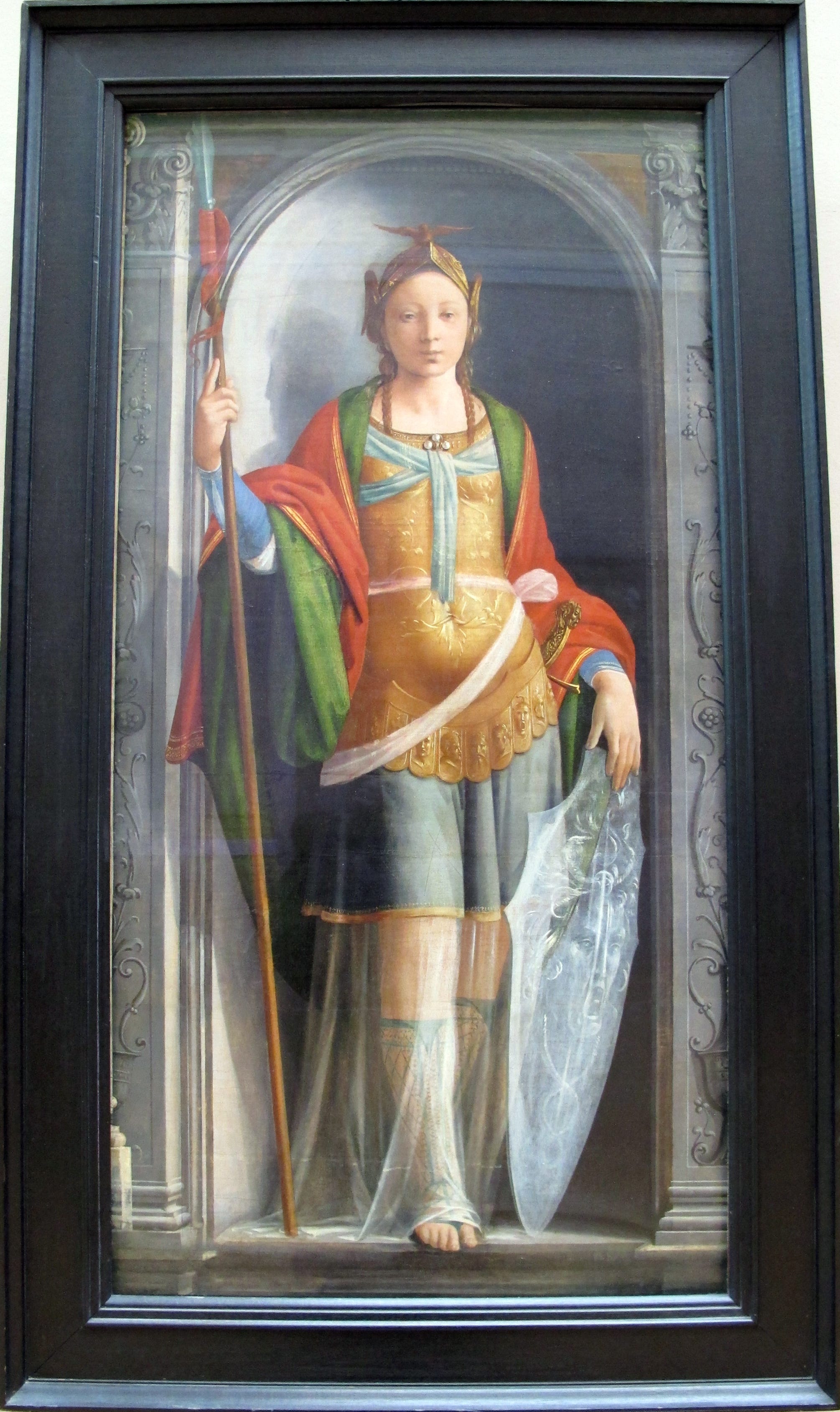
Minerva. Fra Bartolomeo. 1495. Oil on panel. Louvre.

The ever-expanding circle of “we”
BK Fulton. The Constitution does not define “we” with mathematical precision. It does not provide an exhaustive list of who to include. Instead, it establishes a framework through which each generation must wrestle with its own conscience. Accordingly, the ambiguity is not simply a flaw, it can also be understood as a source of extraordinary resilience. Because the meaning of “we” has never been frozen, America has repeatedly found ways to enlarge it.
As America turns 250, unlocking the next generation’s potential is key
Kweilin Ellingrud. The United States has always benefited from extraordinary natural resources, strong institutions, and a culture of innovation. By one count, Americans created or contributed to 76 of the 100 most influential inventions of the past 250 years. Nearly half of today’s Fortune 500 companies were founded by first- or second-generation immigrants. But America’s greatest advantage has been something more fundamental: the belief that each generation can create more opportunity than the one before.
The world’s top innovation clusters
Srijaa Chatterjee and Cynthia Tran Vo. Innovation is often discussed at the national level, but breakthrough technologies tend to emerge from smaller geographic hubs where researchers, startups, investors, and established companies interact closely.
It’s 80 years since Piaggio’s Vespa re-shaped the urban experience
Jonathan Bell. Vespa means “wasp”, a suitably buzzy name for a mode of transport that came to define the sight and sound of Italian city streets after World War Two. Industrialist Rinaldo Piaggio founded the company that bore his name in 1884, first to build rail equipment before diversifying into military machinery, including speedboats, seaplanes and aeroplanes. The company’s Tuscan factory was destroyed in the war and Enrico Piaggio, Rinaldo’s son, set up a new facility and a new mission: mass transit.
Raised on superheroes and Bruce Lee, he’s now a principal dancer
Gia Kourlas. As a child, he spent hours at the barre of his parents’ ballet studio in Medford, Ore. Many of his ballet lessons, though, took place during long car rides home. His father would ask how class went that day, and if it didn’t go well, Roxander would acknowledge what his parent already knew. “‘Yeah, you were talking a lot in the back,’” Roxander said in a video interview, recounting his father’s words. “‘You weren’t being very focused. You know who’s very focused, Jake? Captain America.’” … Roxander was, and remains, an ardent comic book fan — a Batman figure sits on a bookshelf in his apartment today — but he was not a disciplined student. “We talked about courage and bravery,” he said of conversations with his father. “We talked about Bruce Lee and how focused and quiet and accurate he could be. And we talked about always telling the truth.”