
Strategic drift.
Navigating the reality of execution.
There is an organic, unconscious disconnect in the enterprise that invests in strategic planning only to shelve the results until it is time to make a big deal about updating the plan. First, a plan should be in constant refinement mode; market, technology, and stakeholders change all the time. Second, a strategic plan is one of the most obvious documents in an enterprise. If it has been done as it should — attaching daily projects and their tasks to overall objectives (themselves driven by purpose and values), stating the desired results and the performance indicators over them — the plan is the standing reference point for the talent resident in the enterprise. Third, the plan provides context for every important decision around structure, from operating models to budgets. It guides governance, accountability, and celebration of accomplishment, as it forces daylight into pretty jargon and possible prevarication. In some situations, a plan is coerced into oblivion by those who seek to steer things away from measurement to what feels like a clearer path to consolidated control and power. Instead of invoking the strategic plan, they ignore it, which, for the enterprise, is both perilous and a missed opportunity. The executive team that restricts strategy to an ivory tower, for whatever reason, dismisses potential and possibility and threatens the enterprise’s viability. The team that directs its ambition in the context of a strategy, putting the enterprise first, is the team that equips the enterprise to glide through lagoons mysterious or magnificent.
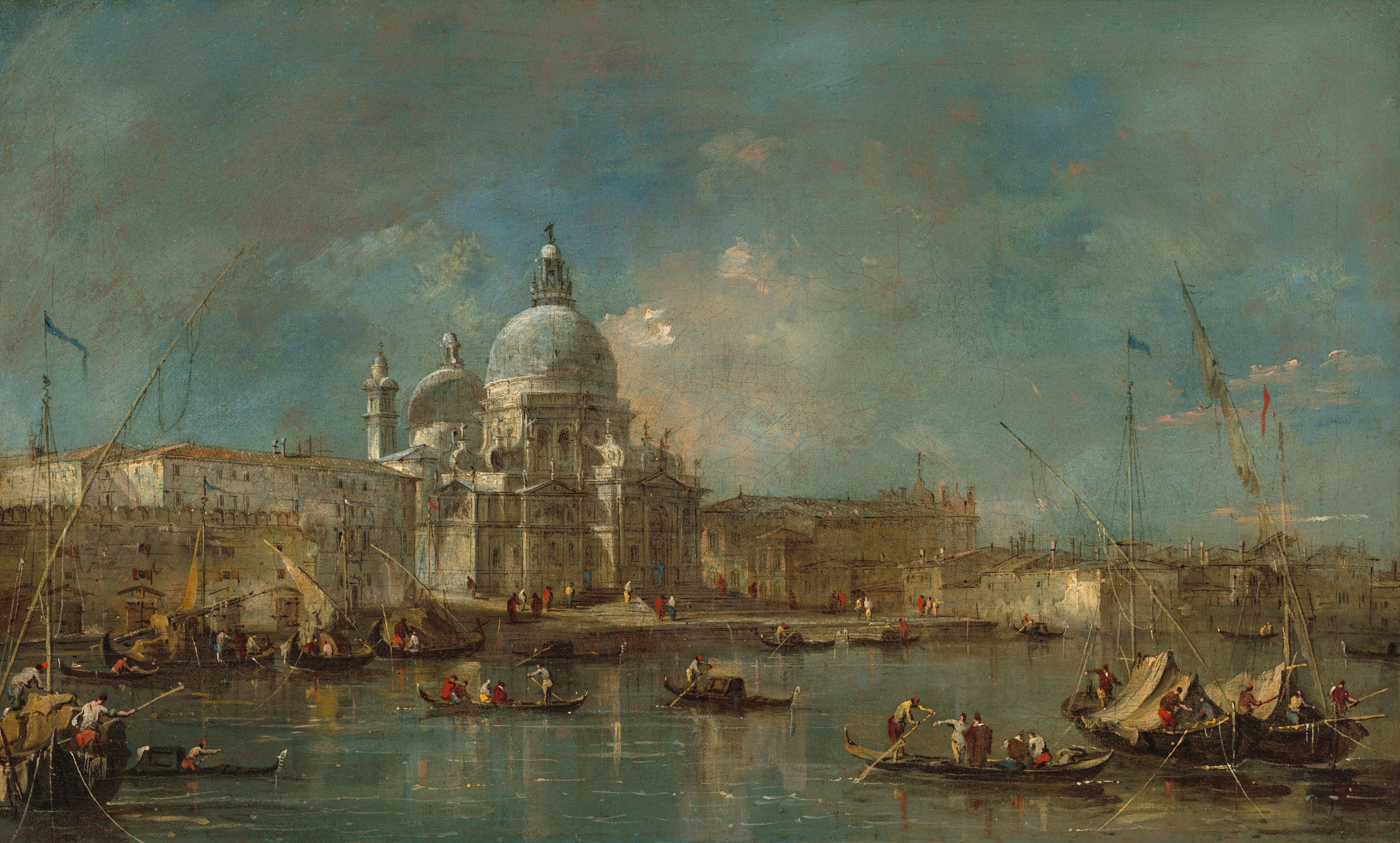
Santa Maria della Salute. Francesco Guardi. 1770. Oil on canvas. Corcoran Collection (William A. Clark Collection). National Gallery of Art.
How to execute a strategic plan
Anthony Taylor. Despite investing significant resources and effort into creating a strategic plan, many organizations fail to revisit it and implement the necessary actions to achieve their goals. Unfortunately, when strategic plans are not reviewed and progress is not made towards their implementation, they can become known as “shelf plans,” gathering dust and becoming obsolete. This term highlights a significant issue faced by many organizations: the failure to put strategic plans into action.
The story of the Venetian gondola
Caffè Florian. A fundamental role in the balance and of counterweights that make the Gondola a masterpiece not only of art but also of physics, is given by the bow. The Gondola Bow, “fero da prova“ (iron rostrum), is located in the front of the boat to balance the weight of the Gondoliere. Expression of an ancient and never faded craft vocation, was once actually built in iron and could weigh twenty kilograms! It is now made of stainless steel or aluminum plated and weighs around eight kilograms. Born to protect the gondola against collisions, it acquired around the middle of the XVIII century the comb shape following the evolution of the gondola. It consists of six prongs (teeth) that, according to a modern interpretation, represent the six districts of Venice with the Giudecca island. The top, the “Zoia” (the jewel), represents the Ducal Horn (headgear of the Doge), which explains why the bow iron is also called Dolfin.
What’s in a flag? Richmond’s has a lot to unpack
Max Posner. The figure on the flag, a faceless boatman paddling a batteau, symbolizes “the tens of thousands of anonymous individuals, composed of a multiplicity of nationalities and races, who through the ages determined Richmond’s homogeneous character and contributed to the City’s success, growth and progress.” … Three men typically piloted a batteau: two men pushed on iron-tipped, wooden poles braced on the river bottom to propel the boats, and a “headman” operated a long wooden oar known as a “sweep” at the end of the batteaux to turn them. Sometimes there were two sweeps per batteau. … Viola Baskerville, author of Black Boatmen of the James River: “…a lot of African Americans that came to this country, or that were enslaved and brought to this country…a lot came from countries where there were rivers...So this innate knowledge and syncopacity, with the river…I would submit that they came with the knowledge of how to read a river. How do you know when the current is shifting? How do you know where to put your pole? …You had an innate ability...to understand how to pole these boats downriver.”